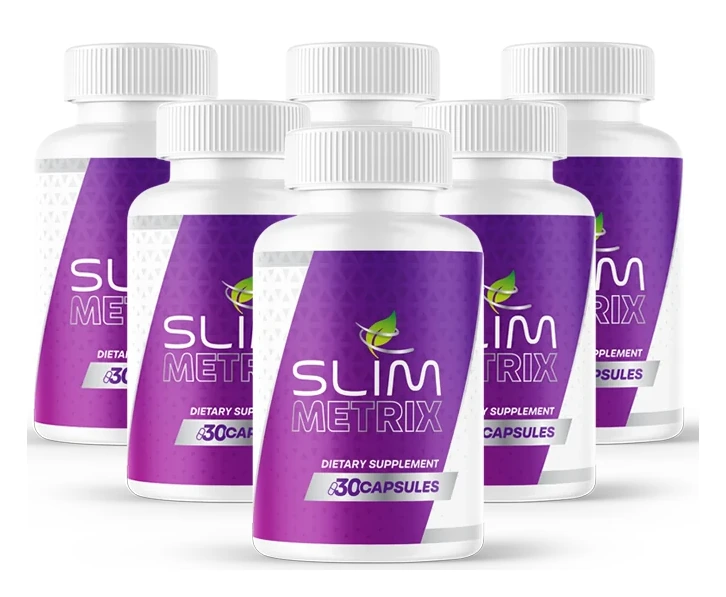
Slim Metrix Official Website › Metabolism guide
Metabolism guideThe Metabolism Supplement Guide: What The Category Actually Is
A metabolism supplement is a mixture of minerals and botanical extracts sold to support glucose handling, appetite and energy expenditure. Most contain between five and twelve ingredients, many hide part of the formula in a proprietary blend, and the best evidence in the whole category describes effects measured over twelve weeks and counted in single kilograms.
Written for the aisle rather than for one bottle, so it stays useful after this purchase.
What these products are made of
| Family | Common members | What the human evidence looks like |
|---|---|---|
| Minerals | Chromium, zinc | Decades of glycaemic literature, mostly in people outside the normal range, at doses well above nutritional amounts |
| Catechins | Green tea extract, EGCG | Measurable changes in energy expenditure in the hundreds of milligrams; pooled weight effects small |
| Alkaloids | Berberine | The strongest botanical evidence in the category, at grams a day, usually split across meals |
| Polyphenols | Resveratrol | Dose-response work exists; absorption is the limiting factor |
| Hepatoprotectives | Milk thistle, silymarin | Glycaemic trials at hundreds of milligrams; liver trials at grams |
| Thermogenics | Cayenne, capsaicin | Small, short, per-meal effects on fullness and energy expenditure |
| Adaptogens | Panax ginseng | A small fasting-glucose effect across sixteen pooled trials |
| Stimulants | Caffeine anhydrous | The only family that reliably produces a same-day sensation |
Compiled from the sources at the foot of this page. Doses are those the trials used, not those any particular label carries.
The first thing to notice is that seven of those eight families are studied at doses that a single daily capsule struggles to carry. A capsule holds a few hundred milligrams in total; berberine alone is trialled at 0.9 to 1.5 grams a day, and a 2024 meta-analysis that records the doses berberine trials use is the review that records it.
The second is that the one family which does fit comfortably into a capsule is the stimulant family, which is why caffeine appears in so much of this aisle. It is cheap, it is light, and it produces a sensation on day one that a buyer reads as the product working.
What a proprietary blend does and does not hide
A proprietary blend prints the total weight of a group of ingredients without publishing the split between them. It is legal, it is common and it has a defensible purpose: a formulation that publishes every ratio is a formulation a competitor can copy exactly.
What it hides is the split. What it does not hide is the ceiling, and that is more useful than most readers realise. A 276 mg blend of six ingredients cannot contain 1,000 mg of berberine, because 1,000 is larger than 276. Arithmetic settles a surprising number of questions that a label seems to leave open.
The practical method is to take the blend total, divide it by the number of ingredients, and compare that figure against the trial doses for the ones you care about. If an even split would still reach the studied dose, the blend is not the problem. If an even split lands two orders of magnitude below, the blend is telling you something whether the formulator intended it to or not.
- The maximum any single member can contribute.
- Whether an even split would reach any studied dose.
- How many ingredients the formulator was willing to name but not quantify, which is a fact about the label rather than the formula.
Why twelve weeks keeps appearing
Because that is the shortest span over which a change in body composition can be distinguished from noise, and the review literature in this category enforces it.
the 2012 Cochrane review of green tea for weight loss set twelve weeks as a floor for inclusion. a 2007 catechin trial in Obesity ran twelve weeks. a 2016 randomised trial in Clinical Nutrition ran twelve weeks. a 2013 trial of Korean red ginseng in overweight adults ran twelve weeks. a 2006 randomised trial in Phytotherapy Research ran four months. the 2012 SyNCH trial in JAMA ran 24 weeks.
Set that against the refund windows this category sells on, which are commonly 30 or 60 days, and a structural mismatch appears. A buyer using a sixty-day window is making a decision on a third to a half of the span the evidence base uses.
That is not a scandal and it is not avoidable: no seller can offer a six-month unconditional refund on a consumable. It does mean a buyer should know which question their window is answering. Tolerance, adherence and appetite are answerable in sixty days. Body composition is not.
Where the money in a metabolism supplement goes
Not mostly into the ingredients, and that is true across the aisle rather than being a criticism of any one product.
Chromium picolinate and zinc gluconate are among the cheapest supplement raw materials in existence. An unstandardised botanical powder is cheap too. What costs money is standardisation: a green tea extract guaranteed to 50% EGCG, a berberine at 97%, a milk thistle at 80% silymarin and a ginseng at 8% ginsenosides are all materially more expensive than their unstandardised equivalents, because the assay and the process behind them cost something.
So a label that publishes standardisation percentages is telling you something real about material quality, even when it declines to publish weights. A label that names a botanical with no percentage and no weight is telling you nothing at all about what is in it.
The rest of the price is marketing, fulfilment, the refund window and margin. That is ordinary retail economics rather than a secret, and it is why the interesting question about price is rarely the cost per bottle. It is what the label is prepared to commit to in exchange for it.
The evidence base, stated honestly
Three systematic reviews frame the whole category and none of them is encouraging in the way a sales page is encouraging.
a 2021 systematic review of weight-loss supplements in Obesity identified 315 randomised trials, found 52 that were low risk of bias and sufficient, and reported that 16 of those showed a significant weight difference between 0.3 and 4.93 kg.
a 2021 meta-analysis in the International Journal of Obesity pooled 67 placebo-controlled trials of isolated compounds and found that none met a 2.5 kg threshold for clinical significance, even where the statistical result was real.
a 2024 laboratory audit of weight-loss supplement labels examined what is actually in products of this kind bought at retail, which is the question that sits underneath all the others.
The constructive reading is not that supplements do nothing. It is that the effect sizes available in this category are small, that they arrive over months, and that a product is therefore worth buying only as an addition to a routine that is already doing the heavy lifting.
A short glossary for this aisle
| Term | What it means | What to do with it |
|---|---|---|
| Standardised to X% | A guaranteed proportion of a marker compound | Useful. Multiply by the weight, if a weight is given |
| Proprietary blend | A total weight without the split | Divide by the number of ingredients and compare against trial doses |
| Thermogenic | Marketing for anything meant to raise heat production | Not a regulated term. Read the ingredient list instead |
| Supports | A structure and function statement | The legal ceiling for a supplement claim. Weaker than it sounds |
| Clinically studied | An ingredient has been in a trial somewhere | Ask at what dose, in whom, and for how long |
| FDA-registered facility | The factory has filed with the agency | Not approval. The FDA does not approve supplements |
Six terms that do most of the work on a label in this aisle.
Sources behind this guide
- Batsis JA, Apolzan JW, Bagley PJ, et al. A Systematic Review of Dietary Supplements and Alternative Therapies for Weight Loss. Obesity (Silver Spring). 2021;29(7):1102-1113. Of 315 randomised trials, 52 were low risk of bias and sufficient, and 16 of those found a significant difference. PMID 34159755. https://pubmed.ncbi.nlm.nih.gov/34159755/
- Bessell E, Maunder A, Lauche R, et al. Efficacy of dietary supplements containing isolated organic compounds for weight loss: a systematic review and meta-analysis of randomised placebo-controlled trials. Int J Obes (Lond). 2021;45(8):1631-1643. No compound reached the authors' 2.5 kg threshold for clinical significance. PMID 33976376. https://pubmed.ncbi.nlm.nih.gov/33976376/
- Wharton S, Bonder R, Jeffery A, et al. The safety and effectiveness of commonly-marketed natural supplements for weight loss in populations with obesity: A critical review of the literature from 2006 to 2016. Crit Rev Food Sci Nutr. 2020;60(10):1614-1630. PMID 30896252. https://pubmed.ncbi.nlm.nih.gov/30896252/
- Crawford C, Lindsey AT, Avula B, et al. Label Accuracy and Quality of Select Weight-Loss Dietary Supplements Sold on or near US Military Bases. Nutrients. 2024;16(24). PMID 39770990. https://pubmed.ncbi.nlm.nih.gov/39770990/
- Wang J, Bi C, Xi H, et al. Effects of administering berberine alone or in combination on type 2 diabetes mellitus: a systematic review and meta-analysis. Front Pharmacol. 2024;15:1455534. The commonest dose across the included trials is 0.9 to 1.5 g a day, in courses of one to three months. PMID 39640489. https://pubmed.ncbi.nlm.nih.gov/39640489/
- Jurgens TM, Whelan AM, Killian L, et al. Green tea for weight loss and weight maintenance in overweight or obese adults. Cochrane Database Syst Rev. 2012;12(12):CD008650. PMID 23235664. https://pubmed.ncbi.nlm.nih.gov/23235664/
- Nagao T, Hase T, Tokimitsu I. A green tea extract high in catechins reduces body fat and cardiovascular risks in humans. Obesity (Silver Spring). 2007;15(6):1473-83. 583 mg of catechins a day against a 96 mg control. PMID 17557985. https://pubmed.ncbi.nlm.nih.gov/17557985/
- Chen IJ, Liu CY, Chiu JP, et al. Therapeutic effect of high-dose green tea extract on weight reduction: A randomized, double-blind, placebo-controlled clinical trial. Clin Nutr. 2016;35(3):592-9. EGCG 856.8 mg a day for 12 weeks in women with central obesity. PMID 26093535. https://pubmed.ncbi.nlm.nih.gov/26093535/
- Cho YH, Ahn SC, Lee SY, et al. Effect of Korean red ginseng on insulin sensitivity in non-diabetic healthy overweight and obese adults. Asia Pac J Clin Nutr. 2013;22(3):365-71. Six grams of red ginseng rootlets a day for 12 weeks. PMID 23945406. https://pubmed.ncbi.nlm.nih.gov/23945406/
- Huseini HF, Larijani B, Heshmat R, et al. The efficacy of Silybum marianum (L.) Gaertn. (silymarin) in the treatment of type II diabetes: a randomized, double-blind, placebo-controlled, clinical trial. Phytother Res. 2006;20(12):1036-9. Silymarin 200 mg three times a day, 600 mg daily, for four months. PMID 17072885. https://pubmed.ncbi.nlm.nih.gov/17072885/
- Fried MW, Navarro VJ, Afdhal N, et al. Effect of silymarin (milk thistle) on liver disease in patients with chronic hepatitis C unsuccessfully treated with interferon therapy: a randomized controlled trial. JAMA. 2012;308(3):274-82. Silymarin 420 mg or 700 mg three times a day for 24 weeks; neither arm beat placebo. PMID 22797645. https://pubmed.ncbi.nlm.nih.gov/22797645/
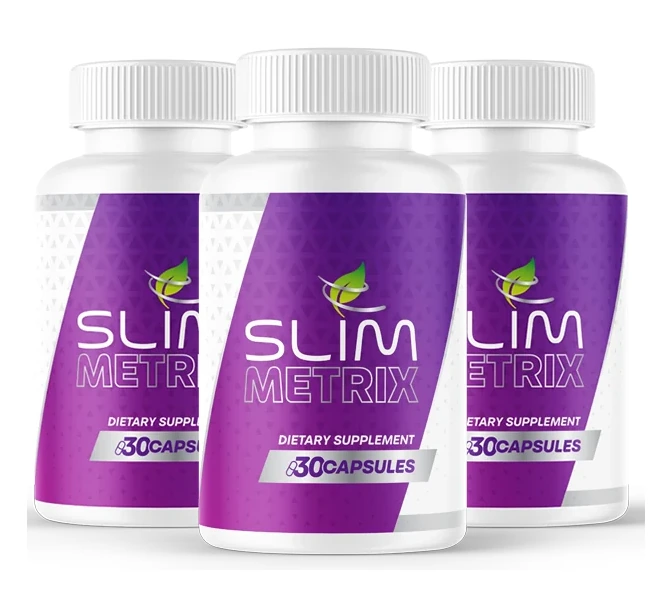
Apply this guide to Slim Metrix yourself
The ingredients page runs every one of these checks on this bottle, including the ones it does not pass.
Two bottles $158 · six bottles $294 · 60-day money-back guarantee
Order Slim Metrix On The Official WebsiteOne capsule a morning · 30 per bottle · lot SLI-26/SL-3249