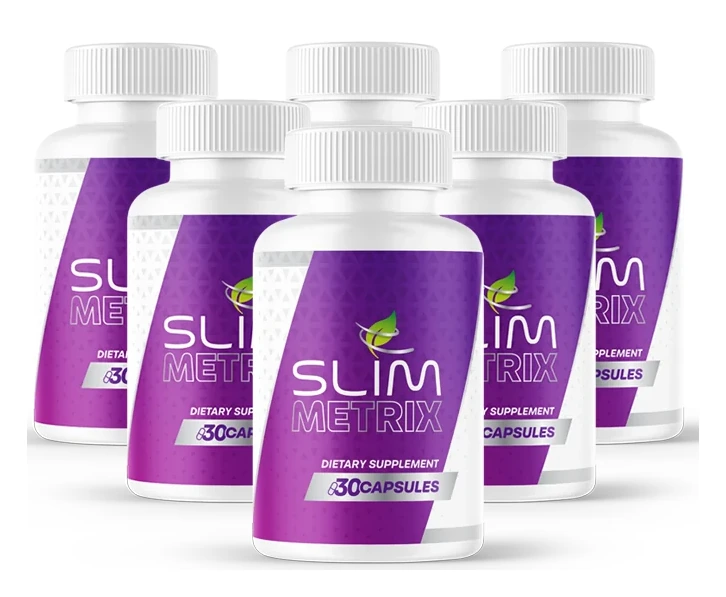
Berberine And Your Prescription: The Specific List
Berberine is the most pharmacologically active name on this label, and that is exactly why it belongs in a conversation with whoever writes your prescriptions. This post is the specific list, not the general caution.
Why berberine is the ingredient that needs the conversation
Every supplement label carries the same sentence about consulting a physician if you are pregnant, nursing, taking medication or living with a medical condition. On most products that sentence is boilerplate. On this one it is doing real work, and the reason is berberine.
Berberine is an isoquinoline alkaloid, which places it closer to a pharmaceutical than most botanical extracts. It has a genuine evidence base in metabolic medicine, and the same properties that produce that evidence base are the ones that make it interact with prescriptions.
What berberine does, and how well the evidence holds
a 2021 meta-analysis of berberine in type 2 diabetes pooled randomised controlled trials of berberine in type 2 diabetes and found improvements across the glycaemic measures, including glycated haemoglobin and fasting glucose. That is a stronger result than most botanicals in this category can show.
a 2015 meta-analysis in the Journal of Ethnopharmacology assessed efficacy and safety across diabetes, hyperlipidaemia and hypertension together. a 2018 meta-analysis of berberine and blood lipids looked specifically at dyslipidaemia. The pattern across all three is consistent, which is unusual in botanical research and is why berberine is taken seriously.
Dose is where this connects back to the bottle. a 2024 meta-analysis that records the doses berberine trials use records the commonest regimen across the included trials as 0.9 to 1.5 grams a day, in courses of one to three months, usually split across meals. This label states 97% purity and no weight, so what a single morning capsule delivers is not something a reader can calculate.
| Finding | Where it comes from | What it means for a buyer |
|---|---|---|
| Improved glycaemic measures in type 2 diabetes | Meta-analysis of randomised trials | Real, and studied in people whose glucose handling is impaired |
| Improved lipid measures | A separate meta-analysis of dyslipidaemia trials | Consistent with the glucose work |
| 0.9 to 1.5 g a day, split across meals | The dose record across included trials | A once-daily capsule is a different regimen |
| Gastrointestinal effects are the common complaint | Reported across the trial literature | The most likely thing a healthy adult will notice |
Summarised from the records cited at the foot of this post.
The glucose interaction, stated precisely
Berberine lowers blood glucose in its own right. That is the central finding of the trials above, and it is the intended direction for a healthy adult.
For someone already taking a glucose-lowering prescription it is a second agent doing the same job, added without anyone having planned the combination. The risk is not exotic and it is not theoretical: two things pushing glucose in the same direction can push it further than either was meant to.
The action is simple and it is not stopping the prescription. It is telling the person who manages it that you are considering a product containing berberine, and letting them decide whether it changes anything.
- Metformin and other oral agents — raise it before starting.
- Sulfonylureas — the class where an additive effect matters most.
- Insulin — any addition to a regimen belongs with the prescriber.
- Any glucose-monitoring routine — worth knowing a new variable has entered it.

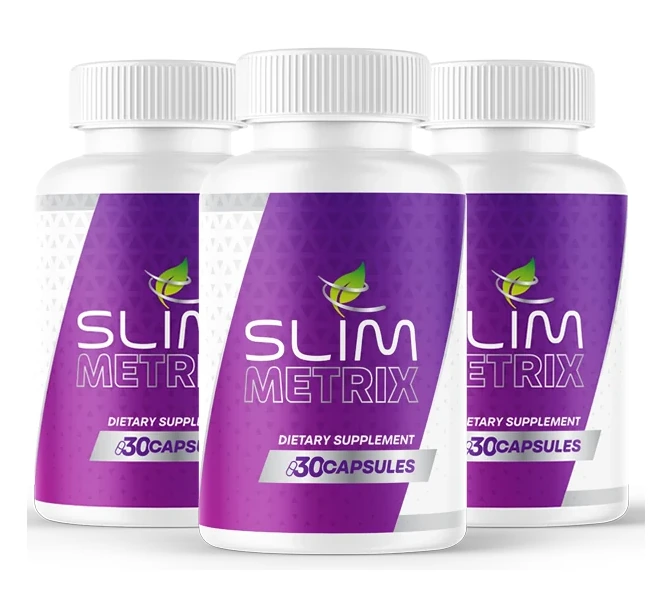
Settle the interaction question before the first Slim Metrix capsule
One conversation, then a routine you can keep. The 60-day window is still there if the answer changes your mind.
Two bottles $158 · six bottles $294 · 60-day money-back guarantee
Order Slim Metrix On The Official WebsiteOne capsule a morning · 30 per bottle · lot SLI-26/SL-3249
The drug-handling interaction
Berberine affects the enzyme and transporter pathways that clear many common prescriptions from the body. That is the mechanism behind most of the interaction reports associated with it.
The practical consequence is that a drug cleared more slowly reaches a higher effective level than intended, which matters most for medicines with a narrow margin between a working dose and too much. It is not possible to give a complete list in a blog post, and a complete list is not what a reader needs: what they need is for the ingredient to be on the list their prescriber sees.
a 2015 meta-analysis in the Journal of Ethnopharmacology covers safety alongside efficacy and is the reference worth taking to that conversation if you want one.
The second name on this label worth raising
Green tea extract, for an entirely different reason.
the United States Pharmacopeia's review of green tea extract and the liver is the United States Pharmacopeia’s comprehensive review of green tea extract hepatotoxicity. Its conclusion is that liver injury is a real but rare event against an extremely large denominator of use, and that the reports concentrate in concentrated extracts taken on an empty stomach. the Drug-Induced Liver Injury Network's series on herbal products describes the wider pattern across herbal and dietary supplements.
What follows is cheap. Take the capsule with food, and know the signs: dark urine, yellowing of the skin or the whites of the eyes, persistent nausea, unusual tiredness and pain under the right ribs. Any of those means stopping and getting a liver panel rather than waiting to see.
- Dark urine.
- Yellowing of the skin or the whites of the eyes.
- Persistent nausea.
- Unusual tiredness.
- Pain under the right ribs.
Who should have the conversation before the first capsule
Four groups, and the first two are not optional.
Anyone under 18, and anyone pregnant or nursing. The seller states both directly and this desk will not sell against either.
Anyone on a prescription medicine, particularly one for blood sugar, blood pressure or the liver. That is the group this post is written for.
Anyone with a liver condition, or taking a medicine that already stresses the liver, for the green tea reason above rather than the berberine one.
- Under 18: not for you.
- Pregnant or nursing: the clinician who knows the pregnancy decides.
- On a glucose-lowering prescription: raise it before starting.
- On any prescription with a narrow therapeutic margin: raise it before starting.
- Liver condition or hepatotoxic medication: raise it before starting.
What a healthy adult is most likely to notice
Digestive upset in the first few days, and probably nothing else.
Gastrointestinal effects are the common complaint in the berberine trial literature, and there is a structural reason this formula concentrates them. The trials split berberine across meals, as a 2024 meta-analysis that records the doses berberine trials use records, partly because of how it behaves in the gut. A single morning capsule delivers whatever is there in one moment.
The first adjustment worth trying is a larger breakfast behind it. If that does not settle it within a few days, the honest reading is that this formulation does not suit you, and the 60-day window exists for exactly that outcome rather than as a formality.
What a healthy adult should not expect is a sensation of the product working. There is no stimulant in this ingredient list, so nothing here is designed to announce itself, and a quiet first week is the formula behaving as intended rather than a problem to be solved with a second capsule.
- Most likely — mild digestive upset in the first three days.
- Worth trying first — taking it with a larger breakfast.
- Not expected — any same-day sensation, since nothing here is a stimulant.
- Never the answer — a second capsule.
How to raise it in a two-minute appointment
Take the bottle, or a photograph of the ingredient list. The brand name is less useful than the list, and the two names that matter are berberine and green tea extract.
Say the sentence that gets a useful answer: I am thinking of taking a supplement containing berberine and green tea extract, is there anything in my prescriptions that makes that a bad idea? That is a specific question and it is answerable in under a minute by somebody who can see your medication list.
If the answer is wait, or no, that is the answer. The 60-day window means an order already placed is still reversible, and the refund policy page has the sequence.
It is worth saying what the alternative to this post looks like, because most supplement pages take it. The alternative is to print the manufacturer’s sentence about consulting a physician, repeat it three more times in slightly different words, and leave the reader with an instruction they cannot act on because it names nothing.
A general caution transfers responsibility without transferring information. A specific one, naming berberine and green tea extract and saying what each does, lets a reader have a thirty-second conversation that actually settles the question. That is the whole difference, and it is why this page exists in the shape it does rather than as a paragraph on a safety page.
It is not a reason to avoid this product. It is the specific version of a sentence every supplement label prints in general terms, and a specific caution is the only kind anyone can act on.
References
- Guo J, Chen H, Zhang X, et al. The Effect of Berberine on Metabolic Profiles in Type 2 Diabetic Patients: A Systematic Review and Meta-Analysis of Randomized Controlled Trials. Oxid Med Cell Longev. 2021;2021:2074610. PMID 34956436. https://pubmed.ncbi.nlm.nih.gov/34956436/
- Lan J, Zhao Y, Dong F, et al. Meta-analysis of the effect and safety of berberine in the treatment of type 2 diabetes mellitus, hyperlipemia and hypertension. J Ethnopharmacol. 2015;161:69-81. PMID 25498346. https://pubmed.ncbi.nlm.nih.gov/25498346/
- Wang J, Bi C, Xi H, et al. Effects of administering berberine alone or in combination on type 2 diabetes mellitus: a systematic review and meta-analysis. Front Pharmacol. 2024;15:1455534. The commonest dose across the included trials is 0.9 to 1.5 g a day, in courses of one to three months. PMID 39640489. https://pubmed.ncbi.nlm.nih.gov/39640489/
- Ju J, Li J, Lin Q, et al. Efficacy and safety of berberine for dyslipidaemias: A systematic review and meta-analysis of randomized clinical trials. Phytomedicine. 2018;50:25-34. PMID 30466986. https://pubmed.ncbi.nlm.nih.gov/30466986/
- Oketch-Rabah HA, Roe AL, Rider CV, et al. United States Pharmacopeia (USP) comprehensive review of the hepatotoxicity of green tea extracts. Toxicol Rep. 2020;7:386-402. PMID 32140423. https://pubmed.ncbi.nlm.nih.gov/32140423/
- Navarro VJ, Khan I, Bjornsson E, et al. Liver injury from herbal and dietary supplements. Hepatology. 2017;65(1):363-373. PMID 27677775. https://pubmed.ncbi.nlm.nih.gov/27677775/